
Nanotechnology Uncovered: Shaping the Future at an Atomic Level
“Nanotechnology Uncovered: Shaping the Future at an Atomic Level” delves into the world of nanotechnology, exploring how manipulating matter at an incredibly small scale can lead to significant innovations. It highlights breakthroughs and future possibilities in various fields, from medicine and electronics to energy and materials science. The title underscores nanotechnology’s role in driving advancements that could redefine our everyday lives and industrial capabilities.
This exploration showcases the transformative potential of working at the atomic and molecular level. there are many examples of structures with one or more nanometer dimensions, and many technologies have incidentally involved such nanostructures for many years, but only recently has it been possible to do it intentionally.
The Basics of Nanotechnology: Understanding the Science at an Atomic Scale
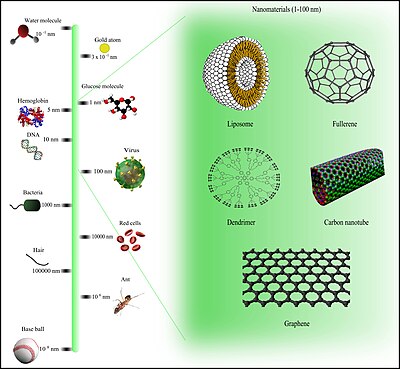
Delves into the foundational aspects of nanotechnology, a field that manipulates matter at the nanoscale, typically between 1 and 100 nanometers. At this scale, materials exhibit unique properties that differ significantly from their bulk counterparts, opening up innovative applications. The article might start by explaining atoms and molecules.
the building blocks of matter, and how their behavior and interactions change at the nanoscale. It would highlight the significance of the surface area-to-volume ratio in nanoparticles and how this influences reactivity and other physical properties. Understanding quantum mechanics is crucial in this context,
as quantum effects dominate at the nanoscale, governing the optical, electrical, and magnetic behaviors of materials. The piece could provide a simplified explanation of quantum phenomena like quantum dots, which are used in medical imaging and electronics. Techniques for manipulating and characterizing materials at the nanoscale, such as electron microscopy and scanning tunneling microscopy, would also be covered.
These technologies allow scientists to observe and manipulate atoms and molecules directly, paving the way for nanoscale engineering. Moreover, the article would touch upon the synthesis of nanomaterials—how nanoparticles, nanotubes, and other nanostructures are created using various chemical and physical methods. Finally, the basics of nanotechnology are not complete without discussing its interdisciplinary nature,
merging physics, chemistry, biology, and engineering. This convergence has led to groundbreaking advancements in areas like drug delivery, renewable energy, and material science, demonstrating the vast potential of nanotechnology to transform numerous sectors.
Innovations Across the Board: Nanotechnology Industry-Specific Uses of Emerging Technologies
Nanotechnology, a cutting-edge field, is revolutionizing various industries by manipulating matter on a molecular scale. It offers innovative solutions tailored to specific needs, such as drug delivery systems in medicine and cancer therapy. Nanotechnology also benefits the electronics industry by creating smaller, more powerful, and energy-efficient devices.
such as smartphones, computers, and wearable devices. This wide-reaching impact of nanotechnology is evident across various sectors. Nanotechnology is revolutionizing the energy sector by improving the efficiency of solar cells and solar panels. Nanomaterials increase light absorption, leading to more effective renewable energy sources. Nano-engineered materials are used in sports equipment, aerospace components,
and water purification processes. Environmental applications include water filtration systems and environmental monitoring sensors. Innovations across the board highlight the potential of nanotechnology in medicine, electronics, energy, materials science, and environmental protection. This diverse applicability demonstrates its role as a key driver in the next wave of technological advancements.

Nanotechnology: Environmental and Energy Solutions
Human life is increasingly reliant on energy consumption and environmental monitoring due to the growing global population. Nanotechnology, an emerging branch of science, offers a promising approach to meeting these demands. It plays a crucial role in energy conversion, distribution, and storage, enhancing cost-effectiveness and eco-friendliness.
Applications of nanotechnology include bioremediation, waste management, green technology, environmental monitoring, emission control, electricity production, and solar power.
Overcoming Obstacles: Key Challenges and Considerations in Implementation
Challenges and Considerations in Implementation of Nanotechnology The introduction of new technologies requires careful planning, assessing potential risks, and ensuring resource allocation. Critical factors, such as stakeholder engagement and training, are crucial for smooth adoption and adaptation. Continuous monitoring and evaluation of the implementation process are essential to identify areas for improvement and achieve desired outcomes efficiently and effectively.
The Future of Nanotechnology
The study shows that nanotechnology can produce energy from various sources, including variations in temperature, light, and glucose, with high conversion efficiency, demonstrating the potential of these new nanomaterials in the future. New nanotechnology offers the potential for objects to harness energy from various variations in their environment, demonstrating the potential of new materials and concepts for converting energy efficiently.
Here’s a table listing various nanotechnology gadgets and their descriptions:
| Nanotechnology Gadget | Description |
|---|---|
| Nanoscale Sensors | Devices that detect and measure minute physical, chemical, or biological elements. |
| Self-Cleaning Fabrics | Clothing treated with nanoparticles to repel water and stains. |
| Flexible Electronics | Electronics with nanostructures allowing flexibility and durability. |
| UV-Blocking Sunscreens | Sunscreens with nanoparticles providing effective protection from harmful UV rays. |
| Anti-Bacterial Coatings | Coatings infused with nanoparticles to resist and eliminate microbial growth. |
| Nanofiltration Systems | Water purification systems using nanoscale filters for enhanced filtration. |
| Quantum Dots in Displays | Display screens with quantum dots that offer vibrant colors and energy efficiency. |
| Nano-Enabled Batteries | Batteries enhanced with nanomaterials for longer life and faster charging. |
| Drug Delivery Nanopatches | Skin patches using nanotechnology for efficient and targeted drug delivery. |
| Nanocomposite Sports Gear | Sporting equipment strengthened with nanocomposites for improved performance. |
The table presents a comprehensive list of nanotechnology’s various applications, each with a brief description.
| Nanotechnology Application | Description |
|---|---|
| Drug Delivery | Targeted drug delivery systems for improved treatment efficacy and reduced side effects. |
| Diagnostic Imaging | Enhanced imaging quality in medical diagnostics, such as MRI and CT scans. |
| Solar Cells | Increased efficiency and reduced costs in solar energy harvesting. |
| Fuel Cells | Improved energy conversion efficiency in fuel cells for cleaner energy. |
| Environmental Remediation | Nanoparticles used in cleaning pollutants from water, air, and soil. |
| Food Packaging | Extended shelf life and improved food safety with nano-embedded packaging. |
| Cosmetics | Nanoparticles used in skincare products for better absorption and results. |
| Textiles | Innovative fabrics with enhanced properties like stain-resistance and durability. |
| Electronics | Miniaturization and performance improvement of electronic components. |
| Materials Science | Advanced materials with unique properties for various industrial applications. |
Table of Contents
Linking to Internal Resources: